
When a Community Chooses to Imagine Together: Reflections From APA Atlanta’s November 2025 Convening
By Jasmine (Jaz) Burton, APA Atlanta Executive Director
In November 2025, 16 of the 20 organizations in our founding APA Atlanta community gathered at Pittsburgh Yards. The space itself mattered. Pittsburgh Yards is a values aligned, community rooted hub made possible in part by the Annie E. Casey Foundation, one of APA Atlanta’s early seed funders. Being there reminded us that place shapes perspective and that shared work feels different when it is grounded in neighborhoods designed for collective flourishing and creative problem solving.
As leaders arrived at our cohort’s in-person convening, a quiet truth filled the room. Before anyone settled into their seats, someone shared, “The cognitive load of leading right now is extremely taxing,” and the room responded with a collective pause. Heads nodded. Shoulders softened. It was the kind of honesty that frees others to speak plainly about what they too have been carrying. Leaders entered holding the emotional and operational weight of an ecosystem under strain, yet they also carried a deep sense of responsibility to Atlanta’s young people. That mixture, of heaviness and hope, shaped everything that followed.
It felt less like a meeting and more like returning to something essential. Even before the agenda began, it was clear that this community continues to choose connection over isolation. That choice set the tone for a day shaped by reflection, imagination, and collective clarity.
In the months leading up to the convening, we had all been absorbing the stories the field was telling us. Insights from the Independent Sector summit which was hosted in Atlanta, the Atlanta Nonprofit Leadership Conference, Atlanta Public Schools Facilities Planning discussions, and data from organizations like the Georgia Center for Nonprofits and Neighborhood Nexus all pointed in the same direction. Our sector is both strained and resilient at the same time. The Nonprofit Finance Fund’s 2025 State of the Nonprofit Sector Survey made this reality unmistakable.
In Georgia, 38% of nonprofits operated with deficits last year. Only 15% have more than 6 months of reserves while 80% percent struggle to raise full cost funding and only 35% can pay their full staff a living wage.
These numbers don’t live in a spreadsheet. They live in shortened program cycles, rising waitlists, delayed hires, and leaders who go home at night still thinking about the urgent needs they cannot yet meet. Neighborhood Nexus emphasized that these pressures are not distributed evenly. They are geographic, structural, and relational, deepening opportunity gaps across communities.
A recent sector update from the Center for Civic Innovation echoed what many leaders have been feeling. Demand is rising. Innovation is happening. Capacity is shrinking. Burnout is deepening. And still, the work continues because communities are worth the effort.
This complex reality has made deeper forms of collaboration more necessary than ever. APA’s research on Mergers and Strategic Collaborations within our 650+ national alliance community shows that more organizations are exploring new models of alignment, shared services, learning partnerships, and strategic restructuring. Leaders are recognizing that no single organization can carry the complexity of this moment alone. Collaboration is shifting from an optional strategy to a structural requirement.
All of this context entered this convening at Pittsburgh Yards with us. So when we began with pair sharing, the reflections were both deeply personal and deeply systemic. One leader said, “I am carrying everything all at once, and I know I am not the only one.” Another wrote, “There is so much possibility, but I am tired.” Others named the joy they feel when they see alumni stepping into leadership roles or watching young people thrive. Words like overwhelmed, hopeful, stretched, energized, uncertain, grounded, and grateful covered the wall. Together, they created an honest portrait of what nonprofit leadership feels like in this moment.
Shaping the Early Arc of Collective Action
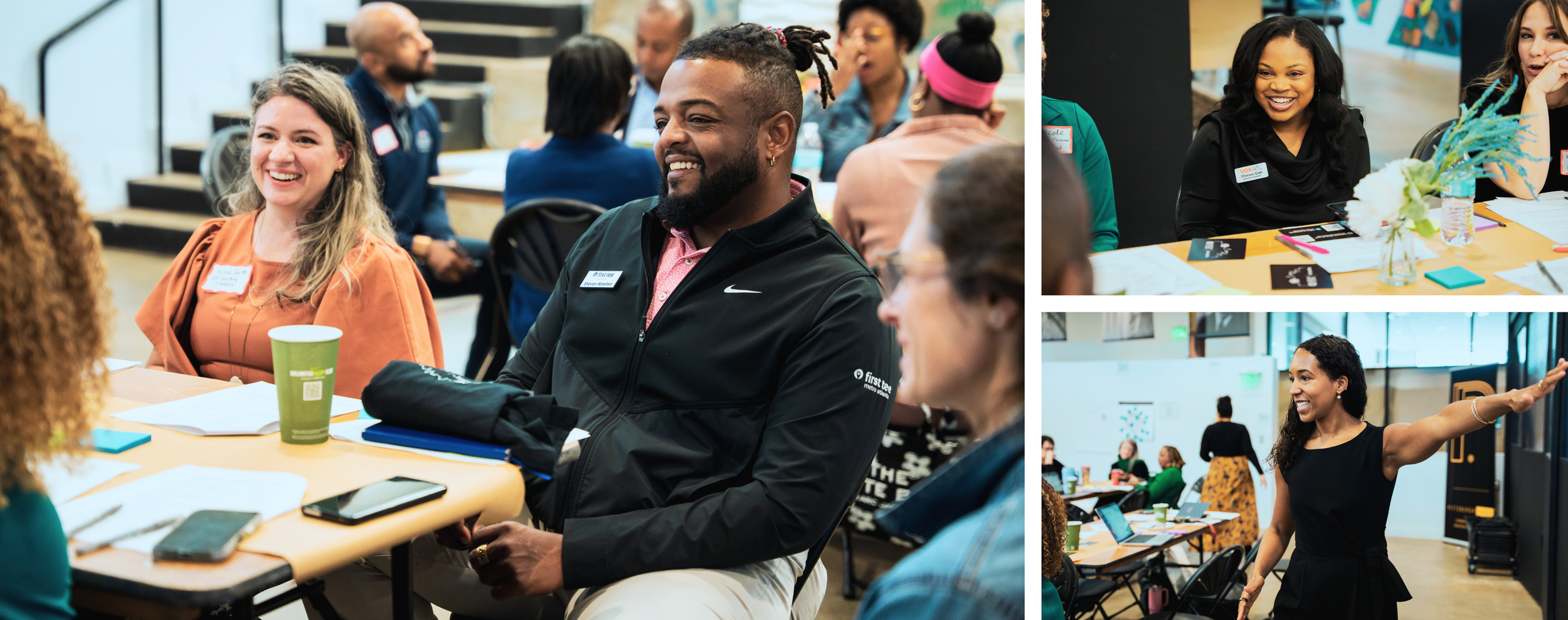
From this shared grounding, we shifted into the heart of the convening. We are in the ideation phase of APA Atlanta’s collective action work. In the spirit of Human-Centered Systems Thinking, this means we are not choosing solutions yet. We are not narrowing direction. We are creating the conditions for shared understanding. In this season, aligned questions matter more than answers.
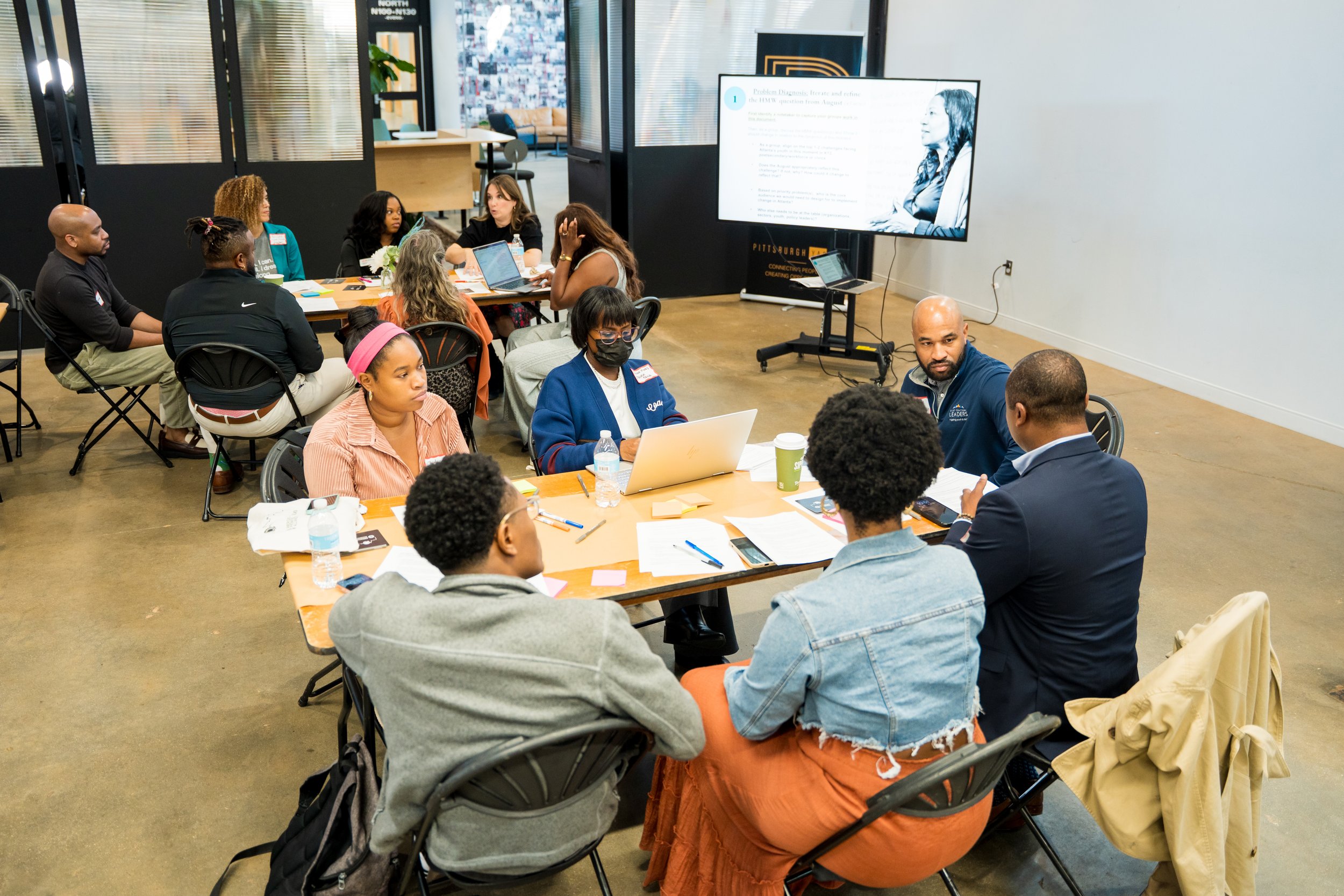
To move this work forward, we returned to the early “How Might We” challenges that surfaced in our inaugural convening in August and invited leaders to deepen them through a facilitated design session. The room transformed quickly into clusters of collaboration. Groups organized around key issue areas that mirror the lived experiences of young people across our city. K12 learning. Postsecondary access and workforce readiness. Civics and wellbeing.
The process began with making sense of what is most pressing. Leaders then shifted into a collaborative design process to deepen the early questions that surfaced in August. The goal was to understand the core challenges beneath the surface and what might need to shift for young people to experience something different.
As one person reflected, “We keep solving for symptoms, because surfacing root causes requires honesty about systems.”
Another added, “Young people tell us what they need if we slow down enough to hear it.” These reflections helped the groups move from broad observations to more focused clarity.
From there, participants transformed their insights into sharper “How Might We” questions that invited creativity grounded in Atlanta’s local context. The session closed with early prototyping, where groups brainstormed ideas that could be further refined and tested in 2026. These were not finished programs. They were early concepts that balanced ambition with feasibility and centered lived experience.
Around the room, a shared truth kept emerging. Collective action is not a single initiative. It is a way of working that requires trust, transparency, shared responsibility, and a willingness to learn in public. As one leader put it, “This is slow work, but it feels like the right work.”
By the time we returned as a full group, something had shifted. Themes were clearer. Questions were sharper. Opportunities felt more aligned. The convening did not produce final decisions, but it moved the work forward in meaningful ways. It shaped the early contours of what APA Atlanta’s 2026 collective action pilots might become and affirmed that building toward something better requires co-designing together.
Looking Ahead
The momentum from this convening reinforces that our next steps are both possible and necessary. By uniting education leaders, community based organizations, and advocates across sectors, we are bolstering the connective tissue that Atlanta’s young people require. The honesty, creativity, and clarity shared in the room signal what can emerge when collaboration becomes culture and when a community chooses to imagine forward with intention.
We are grateful to every leader and organization that joined us.
This work is slow, intentional, and deeply relational. It is also hopeful. As we look ahead, we remain committed to listening deeply, learning collectively, and designing pathways that honor the brilliance, resilience, and possibility of Atlanta’s young people.