
Youth-serving organizations have long found ways to listen to young people, from surveys and focus groups to advisory councils, conversations, and trusted relationships built every day.
The harder work is turning what young people share into decisions about programs, strategy, and resources, giving the people closest to an experience meaningful influence over what happens next, and then showing them what changed because they spoke up.
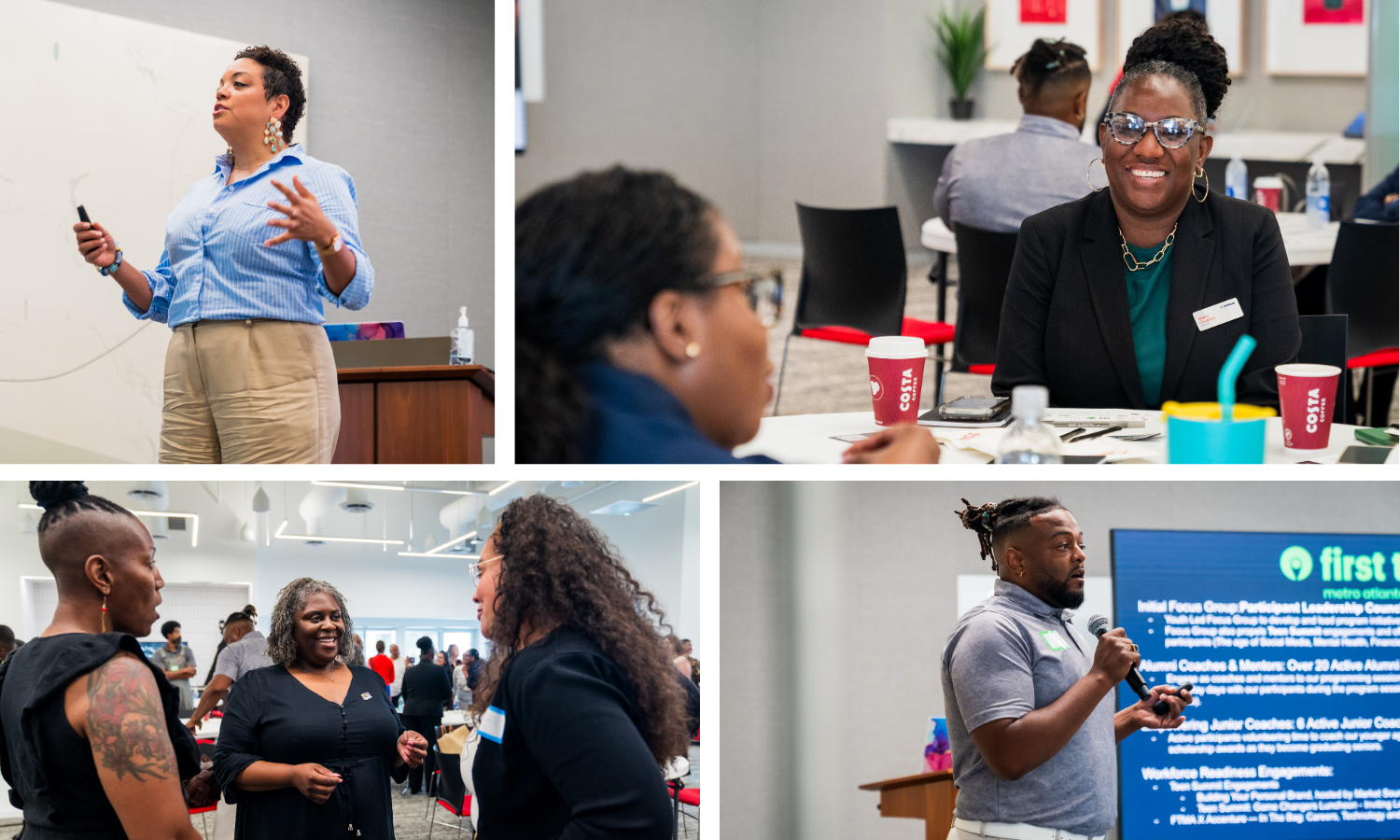
In May 2025, 44 Alliance leaders from 11 Atlanta-based organizations began Insights to Impact, a year-long capacity-building program track convened by America's Promise Alliance. Together, the organizations span the breadth of the Alliance community's work, reaching young people across K-12 education, postsecondary and workforce pathways, and civic engagement. A mobile STEAM lab and a statewide education policy organization do not ask the same questions or engage young people in the same ways, and that diversity became one of the strengths of learning together.
These organizations were already deeply committed to the young people they serve. Many entered with surveys and advisory councils already in place, along with years of experience adapting their programs alongside their constituents. They joined because strong organizations never stop learning, and because young people's needs, expectations, and pathways keep evolving.
Inspired by Stand Together's Customer First Measurement approach, Insights to Impact builds on a simple, bottom-up idea: people closest to an experience hold knowledge that can strengthen programs and create greater value for the people they serve. Over the year, organizations explored how to listen more intentionally, give young people meaningful influence over decisions, act on what they learned, and learn alongside peers doing the same.
Who you ask changes what you learn
Many organizations have a wealth of information about the young people they serve. What these organizations explored was what more they could learn by creating space to hear from young people directly.
Hands On Atlanta mobilizes volunteers across the city and runs a Saturday enrichment program for elementary students. It already had strong evidence of how families experienced that work: 91% of parents reported their child had become more interested in school. The team saw an opportunity to add another perspective by asking students directly, recognizing that young people held knowledge adults might miss. Students shared that Creative Corner lacked the variety they wanted, prompting Hands On Atlanta to add new activities and outdoor time, and to seek student input earlier when designing sessions.
Atlanta CASA built on a longstanding strength. For more than three decades, its court-appointed volunteer advocates have developed trusted relationships with children and young people in foster care, giving the organization rich insight into young people’s experiences. Through Insights to Impact, the team complemented that relationship-based knowledge with a more systematic way to hear directly from older youth about how prepared they felt for adulthood.
Young people identified practical areas where they wanted more support, from transportation and getting an ID to registering for college. Those insights are now informing a transition-planning guide that volunteers can begin using with young people at age 16, creating more time to prepare for adulthood. The organization also grew its partnerships from five to eight, connecting young people to more of the support they said they needed.
The Georgia Partnership for Excellence in Education approached the question from another angle. As an organization focused on education policy and the leaders who shape it, most of its traditional constituents are adults. Rather than building a new engagement structure, the team used forums it already convened and partnered with young people from HealthMPowers, who recommended bringing a wider range of perspectives onto panels and shortening the length of sessions. The organization is continuing to engage youth voice by establishing a Youth Advisory Committee to continue to inform its work across a variety of programming. The Partnership believes that listening to people closest to an experience can strengthen decisions, even when an organization does not provide direct services.
Proximity is not simply about how frequently an organization interacts with young people. Parents, staff, volunteers, and young people themselves each see something different, and strong learning systems create ways for the knowledge of those closest to an experience to influence decisions.
Meet young people where they are
Listening also requires paying attention to how, where, and when people are asked to participate.
Soccer in the Streets runs free soccer programs at public transit stations in underserved communities. The organization found that collecting paper surveys during practice made data entry difficult, given the amount of manual work involved and limited staffing. To address this, staff moved to digital surveys, which increased participation and reduced both manual entry and the need to correct data. This change also boosted participation from families. Staff also created a family advisory committee to gather more input from the community, support greater transparency, and ensure community voices help shape the organization’s work.
Emerging 100 of Atlanta, which mentors young Black men at BEST Academy and supports Collegiate 100 students across Atlanta, took a similarly intentional approach, holding focus groups in a school library on the first morning of the year with members close in age to participants facilitating. Young people spoke candidly about uncertainty around their futures, including whether the programs and career pathways available today would still be there later. Those conversations helped inform a greater emphasis on multiple postsecondary and career pathways, including options that do not require a four-year degree.
Helping Empower Youth, which uses hands-on learning and mentorship to help young people build skills and agency, had already embedded empowerment and youth decision-making into its model. HEY describes its approach as roughly 60-40: young people help shape what they want to see, while staff provide the structure to turn those ideas into programming. During the year, the organization made that practice repeatable by working around testing weeks and using the discussion-based questions young people preferred over another format.
The lesson was not that one method works better than another. A perfectly designed survey has limited value if the people whose perspectives matter most cannot or do not want to complete it.
Tie every question to a decision
Collecting more information is not the same as creating more value. Across the cohort, organizations explored a different starting point: What are we trying to understand, and what decision could this knowledge help us make?
21st Century Leaders develops high school students into leaders through year-round programming across Georgia. Its online platform reached students at scale, and engagement data showed that about half of enrolled students were actively using it. A focus group of 35 youth ambassadors explained usage patterns that the data alone could not. Students wanted a more interactive experience and often did not realize what was already available. The organization is redesigning the platform and has audited more than 170 lessons. When students asked for more hands-on learning, the team asked another question: What does "hands-on" mean to you?
OneGoal, which provides college and career advising to help students from low-income communities succeed after high school, focused its work on strengthening feedback loops with its most important stakeholders: students. The organization conducted focus groups and surveys to hear directly from over 1,000 students and inform its approach. The feedback informed the team's advising approach to more deeply focus on the students who needed it most, emphasizing financial literacy earlier in high school and integrating more concrete resources around postsecondary funding for students already navigating their postsecondary journeys. OneGoal also learned how critical it is to share back with students how their feedback informed program improvements. Closing the loop helps build trust and invest students in continued feedback opportunities.
Achieve Atlanta entered the cohort with ample data. As a college access and success organization, it ties its surveys to scholarship renewal, achieving an 89% response rate among Scholars. The opportunity was to complement that scale with deeper conversation. Roundtables with 85 scholars and roughly 3,000 survey responses across the fall and spring clarified what students were navigating: affordability, the challenge of finding community on campus, and a strong desire for more paid career experiences. Achieve Atlanta shared those insights directly with its university and coaching partners to inform day-to-day work with Scholars and used the feedback to shape Achieve Atlanta's persistence and career strategy and programming.
Show young people what changed
Perhaps the most important practice to emerge across the cohort was also one of the simplest: tell young people what happened after they shared their perspective.
STE(A)M Truck brings hands-on STEAM learning directly to schools and neighborhoods. When the organization created a new youth advisory council, 39 young people applied, and 14 students in grades six through 12 were selected. The organization then went beyond seeking the council's advice. Young people became contributors, helping design and launch Math Trails, a STEAM experience built for their community, and helping secure funding to scale it. All 14 council members reported feeling a strong sense of ownership over the project.
First Tee — Metro Atlanta created a similar opportunity for young people to move from providing input to shaping what came next. Through its Teen Leadership Council, teens developed three initiatives for the year ahead, including plans to revive a teen club dormant since the pandemic. Their voices also help inform the organization’s annual Teen Summit and other career-readiness, leadership, financial literacy, and wellness experiences. Across these efforts, First Tee — Metro Atlanta uses golf as the vehicle, relationships as the catalyst, and whole-child development as the outcome — ensuring young people have a meaningful voice in programs designed to prepare them for life beyond the fairway.
Across the cohort, the practice of closing the loop or communicating with "you said, we did" began to take shape in different forms. STE(A)M Truck sends monthly updates on which ideas are moving forward. Atlanta CASA is developing a summary that young people can read. Hands On Atlanta turned findings into a one-page summary and invited students to vote on what should happen in the next session. Achieve Atlanta emails insights back to the scholars who provided them.
“Seeing the implementation in real time made me feel like a partner rather than a participant.”
— OneGoal student
That distinction gets to the heart of empowerment. Asking for someone's perspective sets an expectation, and closing the loop shows that their time, knowledge, and contribution were valued, even when an organization cannot act on every recommendation. When young people see how their perspectives influence decisions, listening becomes partnership.
Organizations learn faster when they learn together
Each of these organizations could have taken on youth feedback alone, but doing it alongside peers meant nobody had to invent every solution from scratch, and the harder parts of the work went easier in company. Organizations entered with different strengths, relationships, and ways of listening, and that variation became an asset.
By the end of the year, two organizations serving overlapping groups of young people were sharing data, and another adopted its approach to closing the feedback loop after hearing a peer describe it. Continuous improvement does not have to happen in isolation. When organizations have a trusted space to be candid about what they are testing, one organization's experiment can become another's starting point.
What this means for the field
By the end of the year, roughly nine in 10 participants said their organizations value young people's perspectives and have the skills to use them. Only about six in 10 had the systems to do it consistently. Youth-serving organizations value this work. They need the investment to build the infrastructure that sustains it.
That is where philanthropy comes in. Listening requires capacity. Acting on what organizations learn requires flexibility. A program that changes because the people closest to it identify a different need is a responsive organization, not a failed design. Funding and reporting should reflect that. Funders can pay for the staff time and systems that turn feedback into decisions, treat what young people say as evidence alongside enrollment and completion numbers, leave room in grant agreements to change course, and invest in the peer learning that carried the strongest practices in this cohort from one organization to another.
Strong organizations keep learning
The 11 organizations that participated in Insights to Impact did not arrive at the same answers, nor should they. What they shared was a willingness to keep learning: to ask better questions, hear directly from the people closest to the experience, test new approaches, and share those lessons with peers. Over one year, young people helped shape program design, advising models, curriculum, organizational practices, and decisions about resources.
Listening to young people is not a single activity or measurement strategy. It is an ongoing practice of learning that recognizes the dignity, knowledge, and capabilities of people closest to an experience and creates meaningful opportunities for them to contribute to what comes next.
Insights to Impact was convened by America's Promise Alliance and inspired by Stand Together's Customer First Measurement approach. This work was made possible with the support of Stand Together Foundation.
