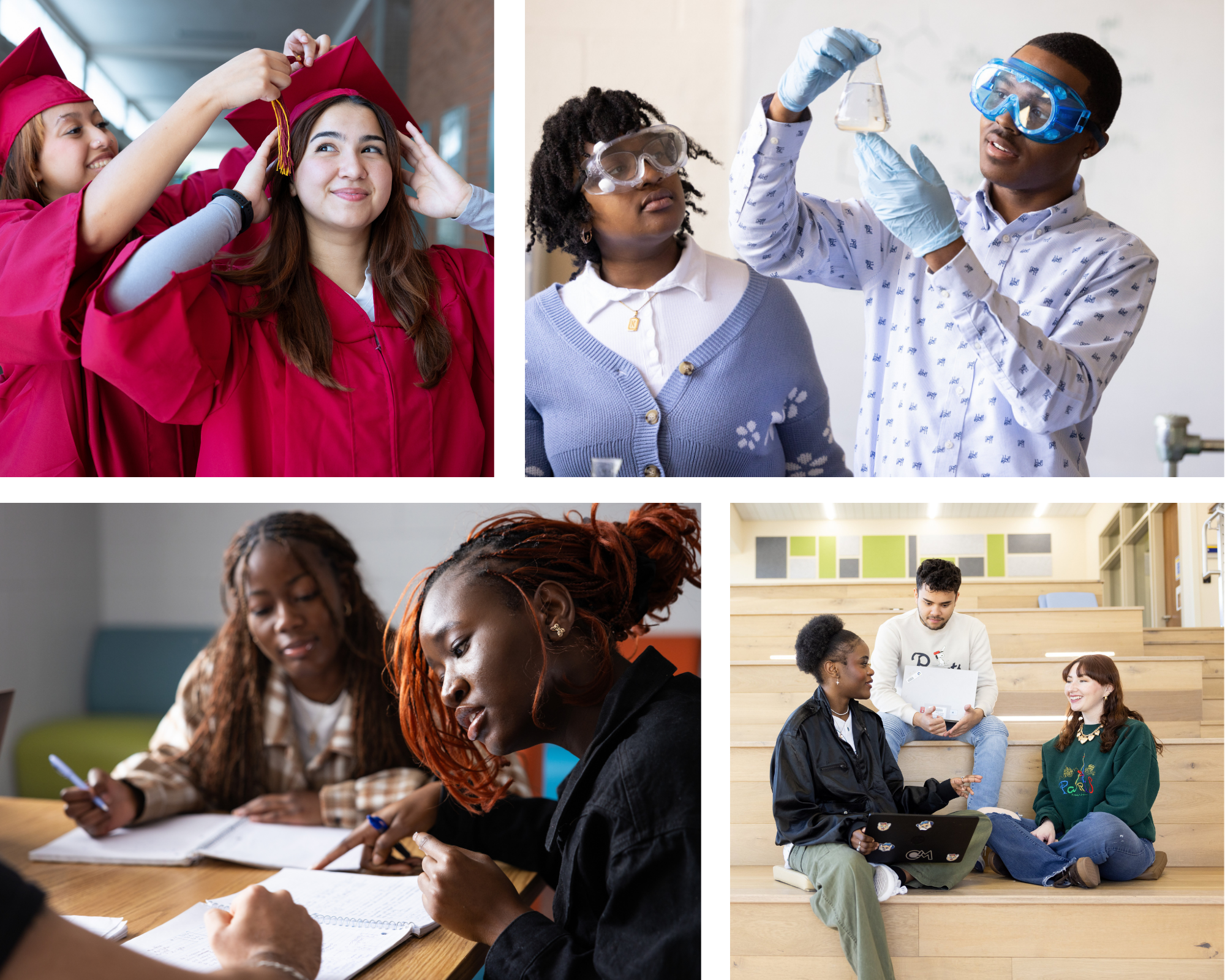
Photos courtesy of Complete College America
State of Young People Report
Each year, our State of Young People research brings our Alliance community of 180 youth-serving organizations together to co-create a research agenda that reflects some of the most pressing challenges and questions facing young people and the leaders who serve them, and then puts those questions directly to young people themselves.
This year we explored three topics: social impact careers, the postsecondary pathways young people weigh after high school, and thriving. Together they address one question. Do young people aspire to make society better, and if so, how do they imagine doing that through their careers and postsecondary educational experiences?


WATCH: Learn more about our annual research from our practitioners and leaders.
Annual Research
Each year, as part of our annual State of Young People research initiative, our Alliance community creates a research agenda designed to identify the gaps in our existing evidence, with a specific focus on the insights that can improve outcomes for young people across the country. This research is a powerful opportunity for our community to drive learning and action around the most important issues facing young people each year, and to bolster the work of nonprofits and institutions who serve them.
This Year’s Research
Young people are making decisions about work and education in a period of sustained instability, with youth unemployment rising over the past year, employers slowing entry-level hiring, artificial intelligence beginning to reshape the labor market, the cost of college continuing to climb, and the social sector many of them might enter facing funding uncertainty of its own. Leaders across our Alliance community identified three topics as most salient to their work in that context:
Social Impact Careers, to better understand young people's aspirations for purpose, social impact, and civic leadership through work.

Postsecondary Pathways, to better understand young people's perspectives on the evolving purpose and value of education after high school.


Thriving, to examine annual trends in youth well-being.

Photo courtesy of Complete College America
Key Findings

of young people are more interested in social impact work because of current societal challenges.
Finding #1: Current social, economic, and political conditions are shaping how young people think about postsecondary options and their careers.
58% say the challenges facing society have made them more interested in social impact work, and the challenges facing college students today are influencing the decision making of as many as two out of three young people.

What would make it more interesting is seeing people who have actually done it, role models, mentors, or adults in life who have done the career and have experiences they can share with youth. Seeing people who come from my background would make it feel more possible.
— Focus Group Participant, Age 17
Finding #2: Many young people are interested in social impact careers and want futures that combine purpose and stability, but few have been shown how to pursue them.
57% are interested in this kind of career, and roughly eight in 10 are either interested or open to it under the right conditions. Only 30% know what it takes to pursue one or where to look for opportunities.

agree that a college degree is important for long-term success.
Finding #3: Young people believe there are multiple pathways to success after high school, but they approach their choice with a focus on career preparation and economic payoff.
88% say nondegree pathways can prepare someone for a good career, but 73% agree that a college degree is important for long-term success. At the same time, 84% say there is too much pressure on young people to go to college.
Finding #4: About six in 10 young people are thriving, with meaningful differences by age, sexual orientation, and political affiliation.
Young adults thrive at lower rates than teens, as do LGBTQ young people compared with their peers, while Republican young people thrive at higher rates, and across every group young people rate financial security and their mental and physical health lowest and close social relationships highest.

6 in 10 young people are thriving.
Considerations and Ways to Move Forward
Young people were specific about what would help them, describing a set of consistent connection points between what they aspire to and what they can actually reach. Much of what they describe already exists somewhere across this sector, and the opportunity in front of us is to make it more common, better connected, and far easier for a young person to find.
Schools, youth programs, and postsecondary institutions can help young people turn a desire to make a difference into a concrete career path.

Employers and community organizations can open up paid internships, work-based learning, and mentorship so that interest becomes experience.
Employers and funders can make these careers financially reachable through pay, benefits, tuition assistance, and stipends.
Colleges, advisors, and state data systems can publish clear, comparable information on what each path costs and where it leads.
Youth-serving organizations and funders can support mental health, economic security, and relationships together rather than separately.

Photo courtesy of 10,000 Degrees
How We Do This Research
America's Promise Alliance partners with Mathematica and NORC at the University of Chicago to design and carry out this study each year, with our Alliance members setting the agenda alongside the America's Promise Alliance Youth Trustee Board and field experts so that the questions we ask are the ones our members most need answered. We work this way so that member organizations can build their programs in response to what young people actually describe rather than to what the adults nearby assume, and so that the challenges young people name, which are rarely the kind any single organization can resolve alone, become shared ground for collective action across our community and among the schools, employers, and funders whose decisions shape what is possible for a young person.
Young people are involved at both ends of this work, helping to shape the design of the study before it goes into the field and then answering it at national scale, with this year's findings drawn from a nationally representative survey of teens and young adults ages 13 to 24 across the country alongside focus groups with young people recruited through our members' networks. Full methodology is available in the report, and complete survey data tables are available to download so others can explore the findings themselves.
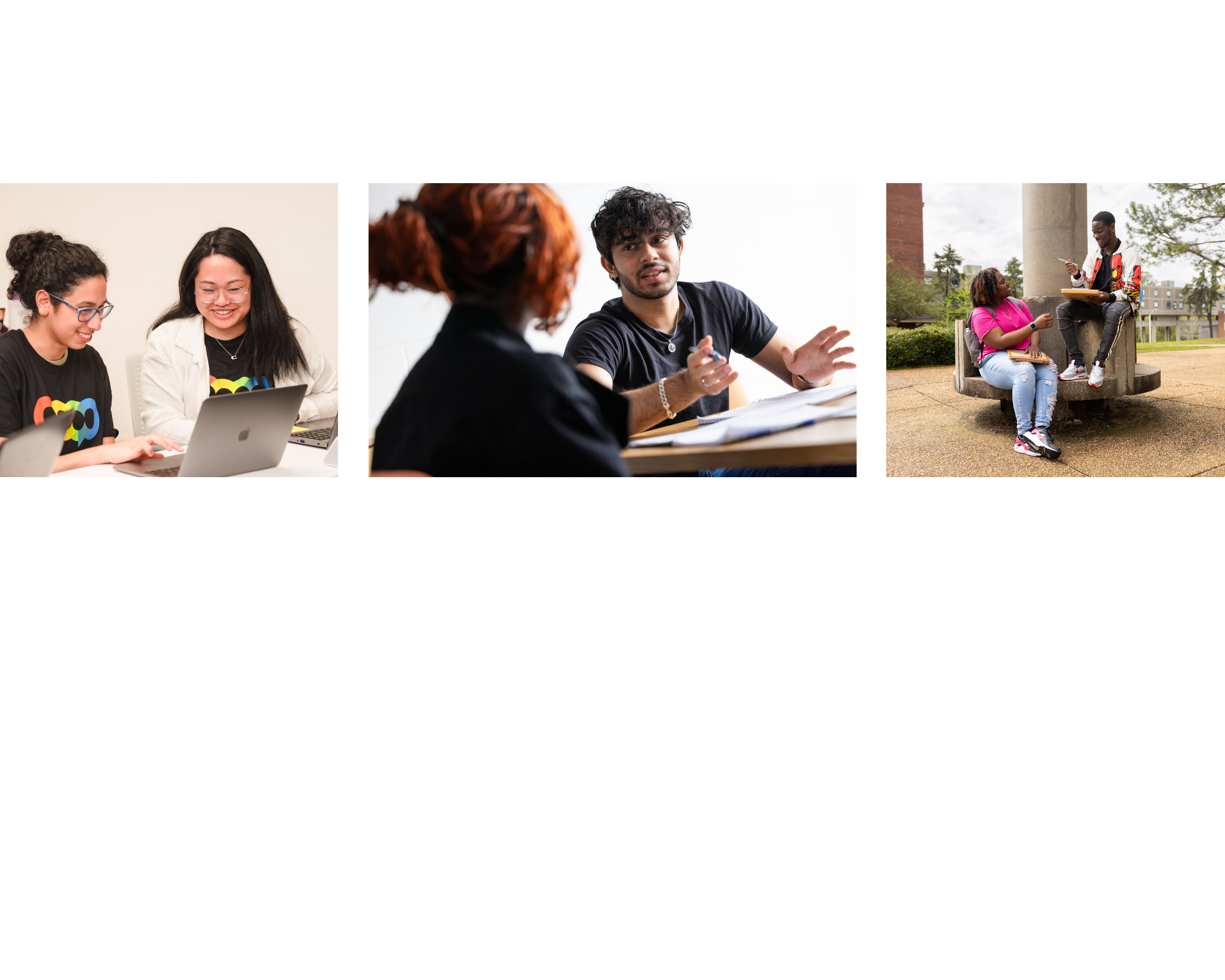
Photos courtesy of COOP, Complete College America
Last Year’s Research
In our first cycle of this series, we asked young people about social divisiveness and healing, civic education, artificial intelligence, and mental health, alongside our first annual measure of thriving.
Young people described a country they saw as fractured and institutions they did not fully trust. 69% felt the nation was more divided than ever, and just 23% said they trusted adults in their own community. They were clear about what they wanted more of: 91% said everyone should have access to civic education, though only 43% felt even somewhat prepared to participate civically based on what they had experienced. On artificial intelligence they were divided rather than enthusiastic, with 31% saying they thought AI would improve their lives. And 59% were thriving, the same share as this year, with young adults and LGBTQ young people thriving at notably lower rates.

of young people were thriving.

felt the nation was more divided than ever.